Wednesday, April 27, 2011

Sunday, February 27, 2011
Wednesday, February 2, 2011
My brain in teaching mode and the Snowstorm in Toronto
Since last night, my mind is flexing to such extent that I slept at 3am. Thinking how to be better everyday that a switch of deliverance came up with me, changing my words and saying from I am going to or I will rather than I have to. How a much more positive spin in acknowleging of what I may have to do can be a clearer and rewarding task if taken masterfully as something that is a matter of honor and pride.
I have to go to work to I am going to work
I have to do the laundry to I will do the laundry
I have to clean up to I will clean up
I have to say sorry to I will say sorry
I have to think about it to I will think about it
Now !That sound more assertive, assuring,and commanding to my own self respect and authority! It feels more of a spoken promise to fulfill and accomplish what needed to happen. This I can do, not just think if I should or can do. I just have to say it, practice it and live by it everyday so I can be a lovelier person for me in the midst of all those "I will..." things to do.
The snowstorm bombarded Toronto at 2 am and I was awake, curious and sublime. My thoughts learned to be smarter and mature to survive it's own stormy ordeals in life.It was such a revelation that awakened my deeper higher intelect to come out of the ordinary thinking from ordinary resolve.
Today the snowstorm is pounding the glass wall of my store and I am smiling with hope and renewd energy that this ,too , like my lame excuses and self-pity, shall pass.
I have to go to work to I am going to work
I have to do the laundry to I will do the laundry
I have to clean up to I will clean up
I have to say sorry to I will say sorry
I have to think about it to I will think about it
Now !That sound more assertive, assuring,and commanding to my own self respect and authority! It feels more of a spoken promise to fulfill and accomplish what needed to happen. This I can do, not just think if I should or can do. I just have to say it, practice it and live by it everyday so I can be a lovelier person for me in the midst of all those "I will..." things to do.
The snowstorm bombarded Toronto at 2 am and I was awake, curious and sublime. My thoughts learned to be smarter and mature to survive it's own stormy ordeals in life.It was such a revelation that awakened my deeper higher intelect to come out of the ordinary thinking from ordinary resolve.
Today the snowstorm is pounding the glass wall of my store and I am smiling with hope and renewd energy that this ,too , like my lame excuses and self-pity, shall pass.
Sunday, January 9, 2011
Tuesday, October 19, 2010
Learning to be filled...
Buying food everyday is great way for me not to eat and cook from frozen. The grocery is my fridge and from buying and cooking my food on same day has given me the much needed interest and some love for cooking. I, as most knows, don't particularly like cooking especially baking>>>NO WAY! Yet am developing some passion in tasting. It has become a new found art and craft for me.
I am not afraid to try different cuisine in restaurants as well as trying to cook some for myself and the boys.
I just notice myself gaining weight though and that might stop me from cooking as much. I would love more to learn making desserts that are not as fattening and addicting. I guess it replaces my jewelry making for now for my eyes has no patience anymore for putting together small parts. I shall not abandon those little hobbies that brought joy to me, I am just venturing to an easier task.
The joy of my boys trying the food I managed to concoct is good enough reward for me to practice more and enjoy the labor of hot steamy cooking in the very small kitchen I have in our apartment. I guess i better be ready to wash my aprons all the time.
This cooking practice reconciled my thought of sewing some more aprons. Now, I can see that art begets art. It is my blooming ideas floating from one scene to creating another. I imagined of painting again, sewing more, singing and dancing with abandon, sketching some and rearranging my furnishings. Yes, only if I can start quick on any of them, soon this imagination shall borne upon tangible object to keep me full physically and artfully.

I am not afraid to try different cuisine in restaurants as well as trying to cook some for myself and the boys.
I just notice myself gaining weight though and that might stop me from cooking as much. I would love more to learn making desserts that are not as fattening and addicting. I guess it replaces my jewelry making for now for my eyes has no patience anymore for putting together small parts. I shall not abandon those little hobbies that brought joy to me, I am just venturing to an easier task.
The joy of my boys trying the food I managed to concoct is good enough reward for me to practice more and enjoy the labor of hot steamy cooking in the very small kitchen I have in our apartment. I guess i better be ready to wash my aprons all the time.
This cooking practice reconciled my thought of sewing some more aprons. Now, I can see that art begets art. It is my blooming ideas floating from one scene to creating another. I imagined of painting again, sewing more, singing and dancing with abandon, sketching some and rearranging my furnishings. Yes, only if I can start quick on any of them, soon this imagination shall borne upon tangible object to keep me full physically and artfully.

Friday, July 30, 2010
Sencha - An Enigma of Japanese Loose-Leaf Green Tea?
All my family and friends knows that i am a tea lover. I want to share to you what is the benefit I get from this wonderful and lovely hot drink i crave everyday.
Sencha - An Enigma of
Despite being the most frequently drunk and well-known of Japanese tea, this green tea is an enigma.
New to Japanese tea, I found it hard to pin down what exactly constitutes a sencha. The word literally means making a decoction of tea (as opposed to making a tea infusion).
It is a not associated with any single tea plant, any process, or any place of production. Yet it is everything - this tea makes up over 80% of production of Japanese tea. Its method forms the core of Japanese tea processing.
Here is one widely quoted definition:
Any tea that has been gently steamed and rolled to produce a rich emerald tea is called a sencha.
I find it easier to attack it from four different angles:
The most important part of tea processing is how these tea enzymes are destroyed, so as to put a halt to oxidation.
This process - called fixation - is what makes Japanese tea different.
Fixation takes place via heating. There are three methods: steaming, pan-roasting and ovening.
The Chinese use pan-roasting and ovening. They invented steaming, but gradually used less of it. It is the Japanese who persisted and perfected the art of steaming.
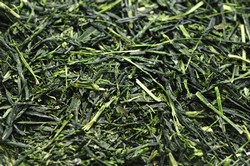 All sencha teas are steamed, but the length of steaming can vary from 20 to 160 seconds.
A regular sencha tea is moderately steamed for 30 to 40 seconds, while deep-steaming can last 40 to 60 seconds.
A Fukamushi sencha tea is a deep-steamed green tea. The word Fukamushi means "steamed for a long time".
What does steaming do to the tea? It has significant impact on the flavor, aroma and color of the tea. A green tea that has been steamed longer has the following characteristics:
Spring harvests are stored to be sold from October to December. The storing process has been found to make the tea richer and milder.
Finally, a Karigane is composed from stems collected from sencha tea leaves. This tea usually offers good value for money, as the price is reasonable and the stems can be brewed to yield a sweet and mellow taste.
The major breeds are the Chinese plant and Assamica.
In Japan, 108 breeds have been registered. The following are commonly used:
It was found in Shizuoka in 1908 by a planter named Suzuki. He happened to find this new tea breed north of a bamboo bush. In Japanese, "bush" is "Yabu" and "north" is "kita", consequently the named "Yabukita".
Yabukita has been popular because it has very good flavor and is resistant to diseases.
 When the tea is harvested is very important.
During the winter, tea bushes store up nutrients. When spring arrives, the newly sprouted tea buds are tender, lush green and packed with nutrients. They are the tastiest and make the highest grade.
According to Japanese calendar, the first day of spring falls on 4 February, and the 88th day marks the first day of the plucking of tea leaves.
According to Japanese tradition, those who drink the tea harvested on the first day will enjoy good health for the rest of the year.
The first harvest is known as Shincha. Sometimes it is also called Ichibancha.
Tea from the final harvest at the end of September is called yobancha.
Here is how they describe it:

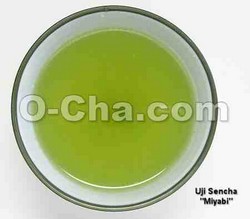 The first was a shincha called "Miyabi" from Uji.
The Uji Miyabi tea was bright emerald color. It had a rich, sweet smell almost like fresh-mown grass.
Steeped for just a minute and a half, it produced an infusion that was bright-green in color with a rich, green, almost brothy flavor. It tasted very nourishing.
The second was a fukamushi sencha from Kagoshima, from the Sae Midori plant.
It had a sharper, sweeter, almost piney smell and was slightly deeper shade of emerald.
Out of all of the teas I have tried from O-Cha, the Sae Midori was my personal favorite. It had a mellow, green vegetable flavor that was nicely balanced out by a fragrant, sweet aftertaste.
Both of these teas were quite tasty. I followed, to the best of my ability, the brewing instructions that came with the tea and had no problem getting good results.
They were not nearly as finicky as the gyokuro, and were even forgiving of the occasional oversteeping.
Sencha - An Enigma of
Japanese Loose-Leaf Green Tea?
A comprehensive guide to the different types of sencha tea available.
New to Japanese tea, I found it hard to pin down what exactly constitutes a sencha. The word literally means making a decoction of tea (as opposed to making a tea infusion).
It is a not associated with any single tea plant, any process, or any place of production. Yet it is everything - this tea makes up over 80% of production of Japanese tea. Its method forms the core of Japanese tea processing.
Here is one widely quoted definition:
Any tea that has been gently steamed and rolled to produce a rich emerald tea is called a sencha.
I find it easier to attack it from four different angles:
- Processing method
- Tea plant species
- Timing of harvest
- Region of production
Fixation and Steaming
Green tea is unoxidised. And yet, freshly harvested tea leaves contain enzymes which encourage oxidation.The most important part of tea processing is how these tea enzymes are destroyed, so as to put a halt to oxidation.
This process - called fixation - is what makes Japanese tea different.
Fixation takes place via heating. There are three methods: steaming, pan-roasting and ovening.
The Chinese use pan-roasting and ovening. They invented steaming, but gradually used less of it. It is the Japanese who persisted and perfected the art of steaming.
Processing Methods
All sencha teas are steamed, but the length of steaming can vary from 20 to 160 seconds.A regular sencha tea is moderately steamed for 30 to 40 seconds, while deep-steaming can last 40 to 60 seconds.
A Fukamushi sencha tea is a deep-steamed green tea. The word Fukamushi means "steamed for a long time".
What does steaming do to the tea? It has significant impact on the flavor, aroma and color of the tea. A green tea that has been steamed longer has the following characteristics:
- Taste becomes stronger, less astringent and less grassy.
- Aroma becomes weaker.
- Liquor color turns from emerald to a darker green.
- Leaves become more powdery. Poor control of steaming can turn tea cloudy.
Spring harvests are stored to be sold from October to December. The storing process has been found to make the tea richer and milder.
Finally, a Karigane is composed from stems collected from sencha tea leaves. This tea usually offers good value for money, as the price is reasonable and the stems can be brewed to yield a sweet and mellow taste.
Tea Plant Species
Just as different varieties of grapes are grown to make wine, different varieties of tea bush are grown to produce tea with different characteristics.The major breeds are the Chinese plant and Assamica.
In Japan, 108 breeds have been registered. The following are commonly used:
- Yabukita
- Asa Tsuyu
- Yutaka Midori
- Sae Midori
It was found in Shizuoka in 1908 by a planter named Suzuki. He happened to find this new tea breed north of a bamboo bush. In Japanese, "bush" is "Yabu" and "north" is "kita", consequently the named "Yabukita".
Yabukita has been popular because it has very good flavor and is resistant to diseases.
Timing of Harvest
When the tea is harvested is very important.During the winter, tea bushes store up nutrients. When spring arrives, the newly sprouted tea buds are tender, lush green and packed with nutrients. They are the tastiest and make the highest grade.
According to Japanese calendar, the first day of spring falls on 4 February, and the 88th day marks the first day of the plucking of tea leaves.
According to Japanese tradition, those who drink the tea harvested on the first day will enjoy good health for the rest of the year.
The first harvest is known as Shincha. Sometimes it is also called Ichibancha.
Tea from the final harvest at the end of September is called yobancha.
Where Are the Tea Buds?
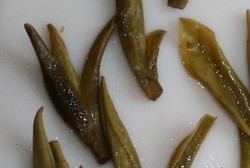 If you are a customer of my tea shop, and you just started out on Japanese tea, you will notice a curious phenomenon:
Most Shincha leaves are fairly matured and broken. There are virtually no tea buds.
When grading green tea, timing is just one factor. The other factor being the type of leaves being harvested.
Most Japanese green teas sold in the West have been machine harvested using the top 3-4 leaves, rather than the tippy one-bud-and-two-leaves customary in Chinese green tea.
Hand harvested high grade Japanese green tea is truly rare.
It is hard to compare Chinese and Japanese green tea - you will have to adjust your expectations.
If you are a customer of my tea shop, and you just started out on Japanese tea, you will notice a curious phenomenon:Most Shincha leaves are fairly matured and broken. There are virtually no tea buds.
When grading green tea, timing is just one factor. The other factor being the type of leaves being harvested.
Most Japanese green teas sold in the West have been machine harvested using the top 3-4 leaves, rather than the tippy one-bud-and-two-leaves customary in Chinese green tea.
Hand harvested high grade Japanese green tea is truly rare.
It is hard to compare Chinese and Japanese green tea - you will have to adjust your expectations.
Regions of Production
According to Ito, the three main growing regions are Shizuoka. Kagoshima and Mie.Here is how they describe it:
Of Japan's 47 prefectures (provinces), Shizuoka, Kagoshima and Mie are the three major tea-producing regions.
Shizuoka, located in the area between Mt. Fuji and the Pacific coast west of Tokyo, is Japan's most prolific tea-growing region, accounting for over 40% of Japan's commercial production each year.
Next is Kagoshima, in southern Kyushu in the far southwest of Japan's main archipelago, which produces about 20% of Japan's tea.
Third is Mie, in central Japan, famous for its long history of tea cultivation.
Other important tea-growing regions include the areas of the ancient capitals—Nara and Kyoto—where Japanese Buddhism has its roots, and various parts of Kyushu, with its comparatively mild climes.
Shizuoka, located in the area between Mt. Fuji and the Pacific coast west of Tokyo, is Japan's most prolific tea-growing region, accounting for over 40% of Japan's commercial production each year.
Next is Kagoshima, in southern Kyushu in the far southwest of Japan's main archipelago, which produces about 20% of Japan's tea.
Third is Mie, in central Japan, famous for its long history of tea cultivation.
Other important tea-growing regions include the areas of the ancient capitals—Nara and Kyoto—where Japanese Buddhism has its roots, and various parts of Kyushu, with its comparatively mild climes.

O-Cha Reviews
I had the opportunity to try two sencha teas from O-Cha.com.The first was a shincha called "Miyabi" from Uji.The Uji Miyabi tea was bright emerald color. It had a rich, sweet smell almost like fresh-mown grass.
Steeped for just a minute and a half, it produced an infusion that was bright-green in color with a rich, green, almost brothy flavor. It tasted very nourishing.
The second was a fukamushi sencha from Kagoshima, from the Sae Midori plant.
It had a sharper, sweeter, almost piney smell and was slightly deeper shade of emerald.
Out of all of the teas I have tried from O-Cha, the Sae Midori was my personal favorite. It had a mellow, green vegetable flavor that was nicely balanced out by a fragrant, sweet aftertaste.
Both of these teas were quite tasty. I followed, to the best of my ability, the brewing instructions that came with the tea and had no problem getting good results.
They were not nearly as finicky as the gyokuro, and were even forgiving of the occasional oversteeping.
Subscribe to:
Posts (Atom)